
Engineered Lifting
Engineered lifting systems built around the load
When the load will not cooperate with a catalogue lifter, the answer is an engineered system: the device, the crane duty and the controls designed together. We bring manufacturers of that equipment into the Canadian market.
Solutions
Where engineered systems earn their cost
Custom lifting pays back through cycle time, damage reduction and operator safety — usually in the applications a standard device handles slowly or not at all.
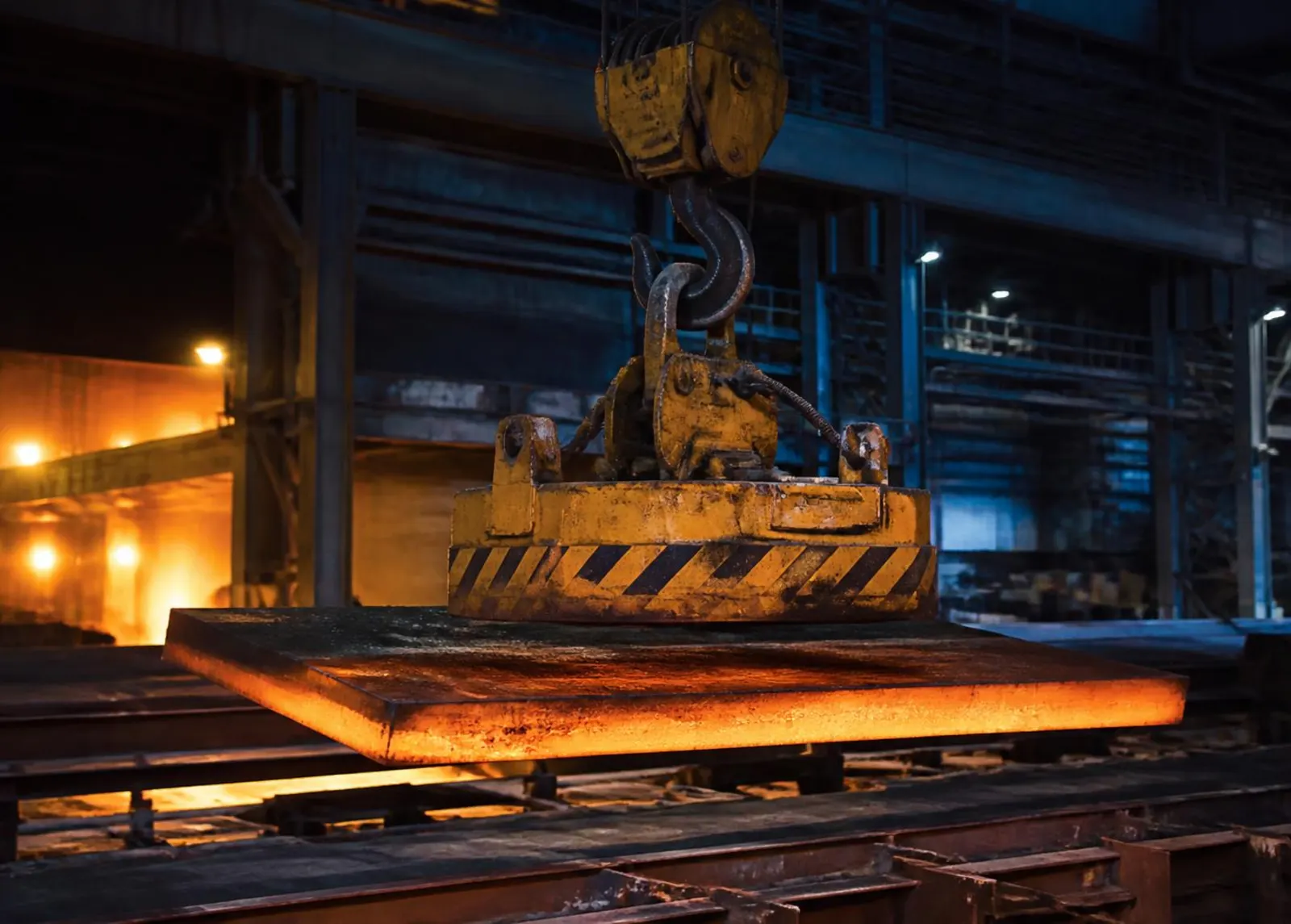
Coil and plate handling
C-hooks, coil grabs, plate clamps, upenders and vacuum systems sized to mill duty, hot loads and the real cycle rate rather than a nominal rating.
Fabrication and awkward loads
Spreader and lifting beams, adjustable bail arrangements, powered rotation and tilt for long, flexible or off-centre assemblies.
Tandem and synchronised lifts
Multi-hook and multi-crane arrangements with load sharing, synchronised motion and monitoring so no single point is overloaded during the lift.
Integrated crane packages
The device, crane duty class, drives and control features specified as one system, so the lifter, the crane and the controls agree on what the job actually is.
Process
From application data to commissioned system
01
Application study
Load data, geometry, centre of gravity, cycle rate, headroom, temperature and environment captured before anything is drawn.
02
Concept and design
Design Category and Service Class chosen from the real duty, then structural and mechanical design to ASME BTH-1 with engineering review.
03
Build, test and document
Fabrication, proof-load testing, marking to B30.20 and a complete manual, drawing and test-certificate package that travels with the device.
04
Commission and support
Site commissioning, operator and maintenance training, inspection intervals and a spares plan held by a Canadian distributor.
Specification
What buyers ask for on Canadian projects
- Design Category and Service Class matched to real duty
- Powered rotation, tilt, spread and grip options
- Load monitoring and overload protection integrated
- Hot-load, foundry and washdown environment packages
- Provincial engineering review handled ahead of shipment
- English documentation and proof-test certificates supplied
- Interchangeable tooling for mixed product families
- Spares and service coverage arranged inside Canada
FAQ
Engineered lifting systems: common questions
- What is an engineered lifting system?
- An engineered lifting system is a lifting solution designed for a specific load, cycle and plant environment rather than selected from a catalogue. It typically combines a purpose-designed below-the-hook device, the crane or hoist duty to suit it, powered motions and the controls needed to place the load accurately and safely.
- When is a custom lifter better than a standard one?
- When the load geometry, centre of gravity, temperature, cycle rate or clearance makes a catalogue device unsafe or slow. Awkward fabrications, hot loads, coil and plate handling, long or flexible parts, and cells with tight headroom almost always justify an engineered device.
- What standards apply to engineered lifting systems in North America?
- ASME BTH-1 governs the structural and mechanical design of the lifting device, including Design Category and Service Class. ASME B30.20 governs marking, testing, inspection and use. Cranes and hoists follow the relevant ASME B30 volumes and, in Canada, CSA B167 plus provincial occupational health and safety regulations.
- How long does an engineered lifting project take?
- A typical project runs concept and load study, design and engineering review, fabrication, proof-load testing and documentation, then site commissioning and operator training. Lead time is driven by engineering review and testing far more than by fabrication, so early application data shortens the schedule most.
- Does Arvanta build lifting systems?
- No. Arvanta Industrial Partners is a market development and manufacturers' representative firm. We connect global OEMs building engineered lifting equipment with the Canadian distributors, integrators and end users who specify and buy it, and we provide the technical representation behind those sales.
Selling engineered lifting equipment into Canada?
We find the distributors and end users who specify custom lifting, represent your engineering credibly, and keep compliance from stalling the first order.